


ODA is Breaking the Debt Cycle, One Student at a Time
- oda.org

- Jul 7
- 4 min read
MONEY MANAGEMENT CLASSES
CONFRONTING THE DEBT TRAP
ONE STUDENT AT A TIME

Breaking the Debt Cycle: A New Life Skill for Village Families
Imagine struggling to make your monthly loan payment after a poor harvest.
A lender arrives with what seems like the perfect solution.
"Don't worry," they say. "Take a new loan and pay off the old one."
One thumbprint and the problem is solved.
Or is it?
Unfortunately, for many subsistence farming families in rural Cambodia, this is often the beginning of a much bigger problem.
The new loan may clear the old debt, but it also creates new repayments, new pressure and often even greater financial hardship. Many families find themselves trapped in a cycle that becomes harder and harder to escape.
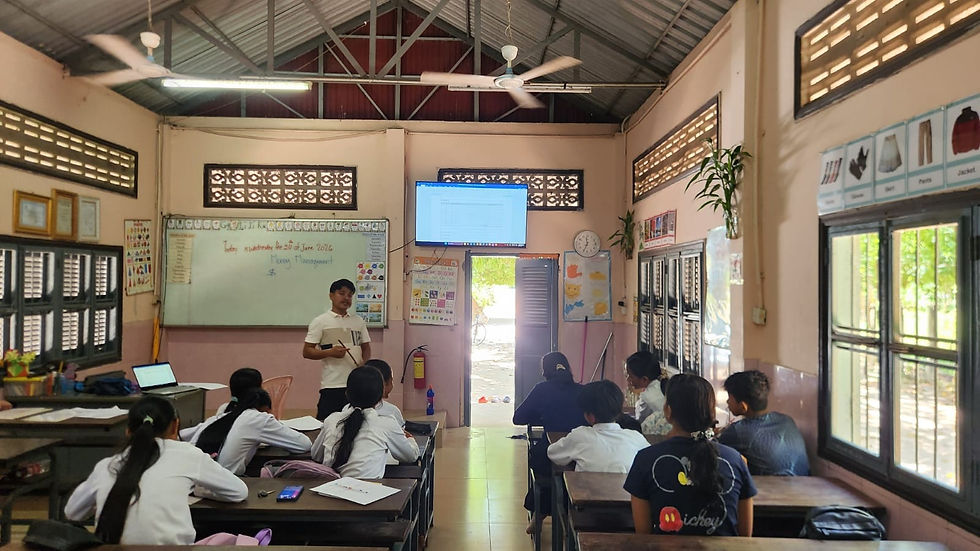
This is the reason ODA recently introduced MONEY MANAGEMENT Financial Education classes into our village schools.
To better understand the reality most village families live with every day, we invite you to watch these two short videos. They show how easily one unpaid loan leads to another, trapping families in a cycle that can be impossible to break.
Play videos:
Vicious Cycle of Debt https://www.youtube.com/watch?v=49UzPVnCI2k
Selling Land to Repay MFI Debt https://www.youtube.com/watch?v=YuAZq8fQefQ
Our finance classes show the high costs in detail and our students are beginning to understand how their families have ended in such desperate situations and want to break away from these loan practices in their future.
Over the past six months, our team has been assessing our program and listening carefully to students, teachers and families. What we have learned has been both encouraging and eye-opening.
Why This Education Matters
Most of the families connected to our schools survive through small-scale farming. Their income depends on weather, crop prices and circumstances beyond their control like floods or drought.
When money is tight, borrowing can seem like the only option.
A loan to buy seed, fertiliser or equipment may appear to be a pathway forward. However, if crops fail or prices fall, the family is often left with larger repayments and even greater stress.
Our teachers tell us that debt has become one of the biggest pressures facing most village families today.
That is why we believe financial education is just as important as teaching English and computer skills.
A Strategic Change
After reviewing the first six months of classes, our dedicated teacher recommended a change.
Rather than teaching all age groups, he now believes the program should focus mainly on Year 10, 11, and 12 students.
These older students are better able to understand financial concepts and are much closer to earning an income themselves. They can also take what they learn home and share it with their parents and younger brothers and sisters.
By educating one young person, we are often educating an entire family.

What Students Are Learning
The classes focus on practical, real-life skills that can help students throughout their lives.
Topics include:
Understanding the difference between needs and wants.
Creating and following a simple budget.
Setting savings goals.
Planning for emergencies.
Learning when to say "no" to unnecessary spending.
Understanding the risks of borrowing.
Recognising debt traps.
Learning about bank accounts and savings options.
Understanding the difference between debit cards and credit cards.
Students are encouraged to think carefully before making financial commitments and to consider the long-term consequences of borrowing money.
Many are hearing these ideas for the very first time.
Teachers Leading the Way
One of the most encouraging outcomes has been the enthusiasm of our teachers as they experienced the course themselves.
One ODA teacher became so passionate about the course that she asked to become more involved. She believes the lessons are critically important for her community and wants to help deliver them to future classes.
Our IT Manager, who assisted in the planning of this program and delivers it to the participants, is now planning to train her so she can assist with the program as it expands.
When local teachers are eager to share these skills with their own communities, it tells us we are focussing in the correct direction.

Looking Beyond Employment
ODA's mission has always been about creating opportunities.
English and computer skills help students gain salaried employment. University support helps talented young people build professional careers.
But education can do even more.
Financial literacy helps families protect the income they earn. It helps them make informed decisions, avoid unnecessary debt and plan for a more secure future.
Combined together, these skills create a powerful pathway out of poverty.
Looking Ahead
This program forms part of our ongoing commitment, as required together with our partners at Global Development Group (GDG), to create practical education that creates employment and improves the lives of village families.
Every lesson delivered is another step towards stronger households, wiser financial decisions, and more secure futures.
A young person who understands budgeting today may one day help their family avoid years of financial hardship.
That would be a remarkable return on education.
We are under no illusions about the time it will take for communities to shy away from these kinds of loans altogether. However, by focusing on students at this pivotal stage in their lives, we seek to give them the exact skills they need to evaluate the highly damaging effects that so often result from predatory debt. Ultimately, we wish to assist them in choosing a safer, less damaging path to grow their lives and careers.
We thank you for your support and encouragement in ODA’s works to assist our village youngsters in chasing their dreams for a greatly improved future.
Together, we are not only opening doors to employment—we are helping families build the knowledge and confidence needed to walk through them.
With sincere thanks,
The ODA Team
“Special thanks to One Tomorrow (APT and Travelmarvel’s Charity Arm), whose support helped seed-fund this important initiative.”


Comments